Target Audience:
Owners, mechanics, and DIY enthusiasts of the Cockshutt 50 tractor
Competitive Advantage:
Comprehensive step-by-step procedures, detailed illustrations, and factory specifications specific to the Cockshutt 50, saving time and money on repairs
Key Features:
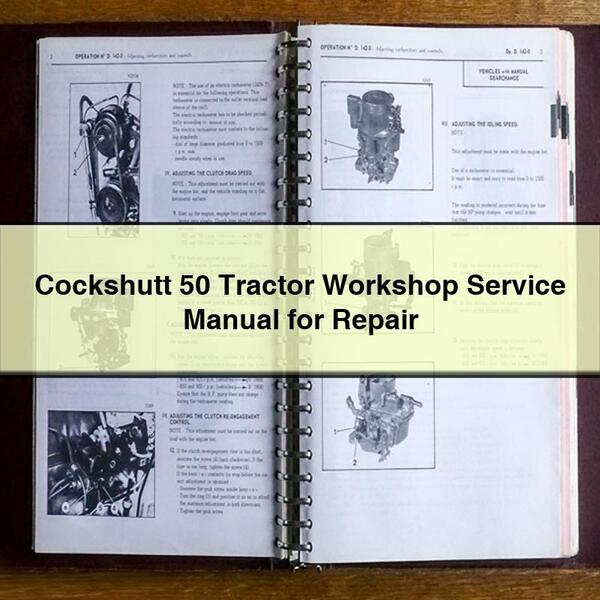
Detailed diagrams, sequential procedures, special tool references, and printable PDF format
Engine:
Complete overhaul, tune-up, fuel system
Cooling System:
Radiator, water pump, thermostat
Electrical System:
Wiring, starting, charging
Transmission:
Gears, clutch, differential, PTO
Steering:
Manual steering, front axle
Brakes:
Shoe and drum brakes, adjustment
Hydraulic System:
Three-point hitch, lift cylinder, pump
Wheels and Tires:
Tire sizes, wheel rims, fluid ballast
Maintenance:
Fluid changes, filter replacement, adjustments
Troubleshooting:
Diagnostic charts for common issues
Removal and Installation:
Component removal and installation steps
Disassembly and Assembly:
Detailed sequences with measuring and wear limits
Adjustments:
Valve clearance, carburetor, clutch, brakes
Illustrations:
Detailed drawings and photos
Parts Information:
Referenced in text; tool numbers and part numbers
Service Data:
tightening torques, clearances, capacities
Service Intervals:
Engine oil change every 100 hours; hydraulic fluid check every 50 hours (recommended)
Fluid Specifications:
Engine oil: SAE 30 (API CC) in warm climates; use 10W-30 in cold weather (approx.)
Known Issues / Common Wear Items:
Worn steering gear, leaking hydraulic seals; inspect brakes and clutch regularly
Manufacturer:
Cockshutt Farm Equipment Ltd.
Model Evolution:
Introduced as the Cockshutt 50, part of the 40-50-60 series that replaced earlier 30/40 models
Production Location:
Brantford, Ontario, Canada