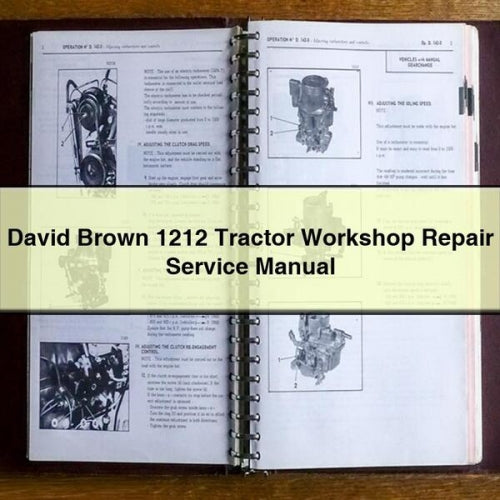
Target Audience:
DIY owners, technicians, and mechanics seeking comprehensive repair and maintenance information.
Advantage:
Same manual used by professional service shops; complete and intact with no missing or corrupt pages.
Saving:
Performing repairs yourself can save hundreds or thousands of dollars in repair bills.
Convenience:
Instant download, printable pages, and easy access on your computer.
Systems Covered:
Engine, lubrication, cooling, fuel, transmission, hydraulics, electrical, brakes, steering, and more.
Pages:
Hundreds of pages as typical for a full workshop manual.
Type:
Workshop Repair Service Manual
File Format:
PDF (Portable Document Format)
Delivery Method:
Instant download
Engine:
Complete engine service, disassembly, and assembly procedures.
Lubrication System:
Oil changes, oil filter replacement, and lubrication points.
Cooling System:
Radiator, coolant, thermostat, and cooling system maintenance.
Fuel System:
Fuel tank, pump, filter, and carburetor/injection system.
Disassembly and Servicing:
Step-by-step instructions for major components.
General:
General maintenance and overall repair information.
Separation:
Procedures for separating tractor sections.
Clutch:
Clutch inspection, adjustment, and replacement.
Transmission:
Transmission service, repair, and troubleshooting.
Drive Chain & Sprockets:
Inspection, adjustment, and replacement of drive chain and sprockets.
Rear Axle:
Rear axle service, bearing adjustment, and seal replacement.
Brakes:
Brake system inspection, adjustment, and overhaul.
Front Axle:
Front axle service and steering knuckle maintenance.
Steering:
Steering system service and adjustment.
Shocks:
Shock absorber inspection and replacement.
Body Work:
Sheet metal and body maintenance and repair.
Intake & Exhaust:
Intake manifold, exhaust manifold, and related components.
Hydraulic System:
Hydraulic pump, hoses, and lift system service.
Electrical System:
Wiring diagrams, starter, alternator, and lighting.
Routine Maintenance:
Scheduled maintenance tasks and intervals.
Advanced Troubleshooting:
In-depth diagnostic procedures for complex issues.
Wiring Diagram:
Complete wiring diagrams for electrical systems.
File Type:
PDF (Portable Document Format)
Compatibility:
Works with any device that supports PDF files, including Windows, Mac, and mobile.
Requirements:
PDF reader software (e.g., Adobe Reader).
Searchability:
Searchable text for quick location of topics.
Print Resolution:
High-quality print reproduction suitable for printing individual pages.
Binding:
Digital - no physical binding
Paper:
N/A - digital file
Engine Type:
Diesel engine typically used in the David Brown 1212.
Models Covered:
All engine options offered for the 1212 model line.
Power Output:
Exact horsepower not specified in the manual description; refer to factory specifications.
Injection System:
Details not provided in manual; refer to service manual for precise components.
Crash Test Information:
N/A - tractors are not typically crash-tested.
Braking:
Mechanical or hydraulic brakes as designed for tractor operation.
Steering:
Manual or power steering, depending on model.
Rollover Protection:
Not specified in manual; check dealer for ROPS availability.
Engine Oil:
Change per factory schedule, typically every 100-150 hours.
Transmission Oil:
Check and change per factory schedule.
Hydraulic Fluid:
Inspect and change per factory schedule.
Engine Oil Type:
Refer to manual for recommended viscosity and API classification.
Coolant:
Recommended type per manual.
Common Wear Items:
Belts, hoses, seals, and filters are typical wear items.
Manufacturer:
David Brown Ltd., a British company known for agricultural machinery.
Evolution:
The 1212 is part of the David Brown tractor range; specific history not detailed in the manual.
Production Site:
Meitham, Huddersfield, England (typical for David Brown tractors).