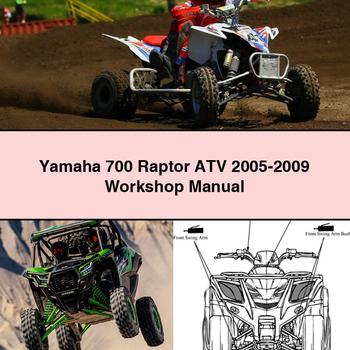
Model:
Raptor 700 (YFM700R)
Vehicle Type:
Sport ATV (All-Terrain Vehicle)
Model Years Covered:
2005, 2006, 2007, 2008, 2009
Generation:
First generation Raptor 700
Target Audience:
Owners and mechanics of all skill levels, from beginners to experienced technicians
Intended Use:
Diagnosing vehicle-related problems and performing recommended repair and maintenance procedures
Skill Range:
Written so even beginner-level mechanics can perform disassembly, inspection, rebuilding and assembly
User Base:
Any owner of the vehicle, regardless of professional background
Complete Coverage:
Full factory-level workshop procedures for the entire 2005-2009 model run
Accessibility:
Compatible with all operating systems on any device with a PDF reader
Convenience:
Instant email delivery with no waiting time
Reusability:
Guidance on inspecting parts for reuse during rebuilds
Manual Type:
Workshop / Service / Repair manual (factory-level)
Coverage:
Complete collection covering 2005-2009 Yamaha Raptor 700
Page Count:
N/A - not specified for this digital collection
File Format:
PDF (delivered in WINZIP archive)
Delivery Method:
Instant download, delivered immediately via email
Compatibility:
All versions of operating systems on any device with a PDF reader
General Information:
Vehicle identification, general data and workshop practices
Specifications:
Complete factory specifications for all systems
Engine:
Full engine disassembly, inspection, rebuild and assembly
Cooling System:
Liquid cooling system service and diagnosis
Fuel Injection System:
EFI components, sensors and fuel delivery procedures
Chassis:
Frame, suspension, steering, wheels and brakes
Electrical:
Wiring, ignition, charging, starting and lighting systems
Periodic Checks and Adjustments:
Scheduled inspection, adjustment and maintenance procedures
Troubleshooting:
Systematic fault-finding for engine, fuel injection, chassis and electrical systems
Disassembly and Assembly:
Step-by-step component removal, rebuilding and reinstallation
Parts Inspection:
Criteria for inspecting parts for reuse during rebuilds
Torque Specifications:
Factory tightening torque values for fasteners
Special Tools:
Recommended special service tools and their use
Detail Level:
Factory workshop level, suitable for complete engine and chassis rebuilds
Beginner Support:
Procedures written to guide mechanics even at the beginner stage
Diagnosis Focus:
Structured to help determine the cause of vehicle-related problems
Illustrations:
N/A - not specified for this digital collection
Parts Data:
Specifications and inspection limits for determining part serviceability
Reusability Guidance:
Wear limit criteria for deciding whether parts can be reused
Part Numbers:
N/A - not specified for this manual collection
File Format:
PDF (searchable, bookmarked, zoomable)
Compatibility:
Windows, macOS, Linux, iOS, and Android — any device with a PDF reader
Requirements:
A PDF reader application (e.g. Adobe Acrobat Reader, free)
Searchability:
Fully text searchable for fast lookup of any topic
Print Quality:
High-resolution digital pages, printable at full clarity
Binding Type:
N/A — digital download, no physical binding
Paper Type:
N/A — digital download, no physical paper
Engine:
686 cc liquid-cooled 4-stroke single-cylinder SOHC, 4 valves
Bore x Stroke:
102.0 mm x 84.0 mm
Compression Ratio:
9.2 : 1 (approximately)
Cooling:
Liquid-cooled with radiator and electric fan
Carburetor:
N/A - fitted with electronic fuel injection instead
Starting System:
Electric start
Fuel Delivery:
Yamaha electronic fuel injection (EFI) with 40 mm throttle body
Fuel Tank Capacity:
Approximately 11.4 liters (3.0 US gal)
Fuel Requirement:
Regular unleaded gasoline
Wheelbase:
Approximately 1,250 mm (49.2 in)
Overall Length:
Approximately 1,845 mm (72.6 in)
Overall Width:
Approximately 1,110 mm (43.7 in)
Overall Height:
Approximately 1,115 mm (43.9 in)
Ground Clearance:
Approximately 112 mm (4.4 in)
Curb Weight:
Approximately 181 kg (399 lb)
Fuel Capacity:
Approximately 11.4 liters (3.0 US gal)
Crash Test Ratings:
N/A - ATVs are not subject to automotive crash test ratings
Safety Standard Compliance:
Built to comply with applicable ANSI/SVIA ATV standards of the era
Brakes:
Dual hydraulic disc brakes front, hydraulic disc brake rear
Lighting:
Headlight and taillight for visibility
Engine Braking:
Engine braking effect through transmission
Frame Protection:
Full-length footwells and steel frame construction
Ride Position:
Ergonomic sport seating for rider control
Warning Systems:
Neutral indicator and coolant temperature warning indicator
Audio System:
N/A - not applicable to an ATV
Instrumentation and Assistance
Instrument Cluster:
Digital LCD multifunction display with speedometer, odometer and tripmeter
Indicators:
Neutral light, coolant temperature warning light and EFI indicator
Driver Assistance:
N/A - sport ATV with no electronic rider aids
Ignition:
Digital CDI ignition system with electric starting
Periodic Maintenance:
Full periodic checks and adjustments schedule included in the manual
Initial Service:
Break-in inspection recommended after first hours of operation
Regular Service:
Scheduled checks for engine, cooling, fuel injection, chassis and electrical systems
Engine Oil:
Yamalube or equivalent 4-stroke motor oil, SAE grade per temperature chart
Coolant:
High-quality ethylene glycol antifreeze mixed with soft water
Oil Capacity:
Approximately 1.5 liters with filter change (verify in manual)
Air Filter:
Foam air filter requiring regular cleaning and oiling in dusty conditions
Chain:
Drive chain requiring regular lubrication, slack adjustment and wear checks
Brake Pads:
Hydraulic disc brake pads subject to wear inspection
Valve Clearance:
Periodic valve clearance checks recommended
Spark Plug:
Scheduled spark plug inspection and replacement
Manufacturer:
Yamaha Motor Company, a Japanese manufacturer of motorcycles, ATVs and powersports products
Sport ATV Legacy:
Yamaha built its ATV reputation on the Banshee and Raptor line of high-performance sport machines
Introduction:
The Raptor 700 (YFM700R) was introduced in 2006 as a successor to the Raptor 660
2006 Model:
New 686 cc fuel-injected single replaced the 660 cc engine
2007-2009:
Continued with incremental updates to suspension and detailing through 2009
Significance:
Set the benchmark for modern big-bore four-stroke sport ATVs
Production Location:
Yamaha manufacturing facilities in Japan
Production Run:
2005-2009 model years covered by this manual